
CrownCharter Guides · 11 min read
Where to Stay and Eat in the Hunter Valley
By CrownCharter Editorial Team · Published
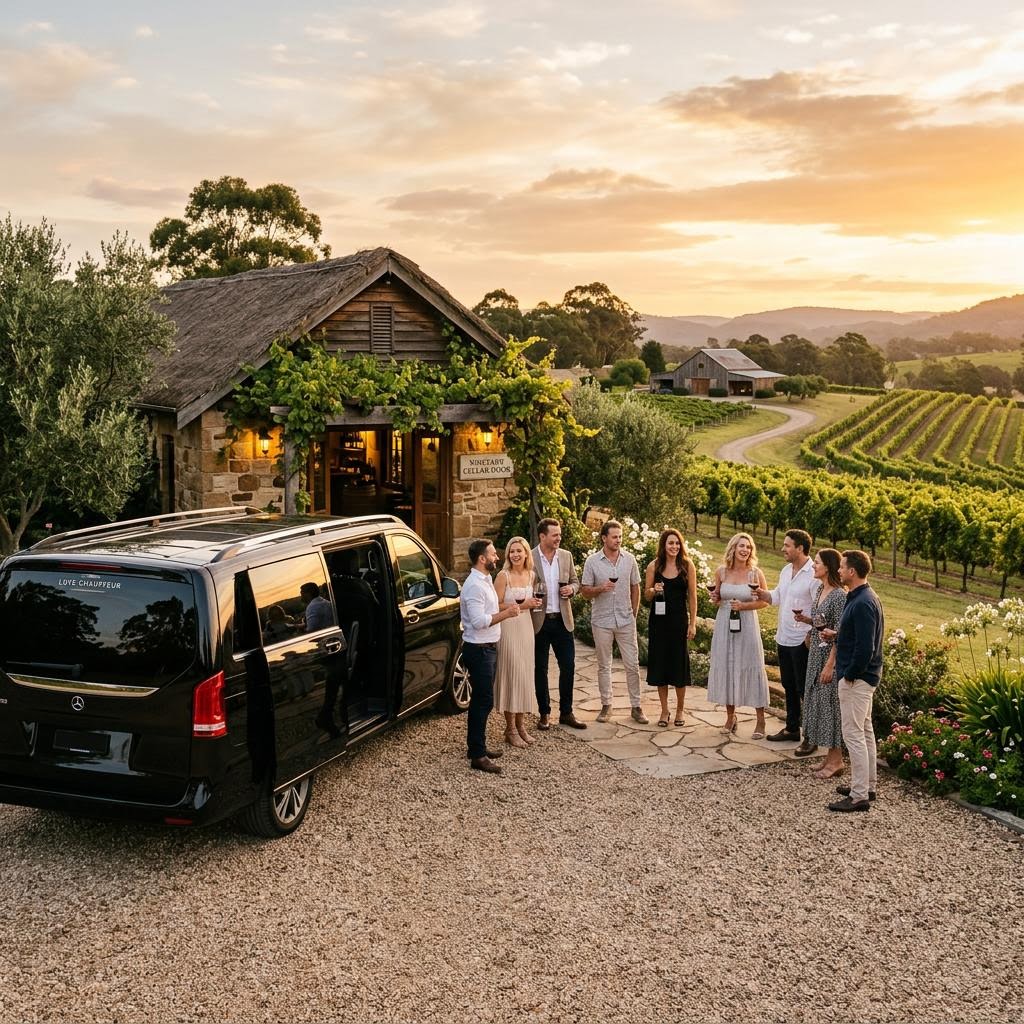
The Hunter Valley is often described as one destination, but accommodation, cellar doors and restaurants are spread across a broad rural district. Choosing where to sleep affects how much of the visit is spent moving between bookings. Pokolbin places you near the largest concentration of visitor venues; Lovedale offers a quieter landscape east of the main cluster; Rothbury and surrounding localities suit resort and group stays; Cessnock provides everyday shops and a wider range of practical services.
There is no single best hotel or restaurant for every trip. A couple planning a tasting-led weekend has different needs from a family seeking a self-contained cottage or a group attending a concert. This guide focuses on the decisions that remain useful as individual venues change: location, accommodation style, meal timing, transport and the sequence of reservations.
Understand the Hunter Valley layout
For most wine visitors, “Hunter Valley” means the Lower Hunter wine country centred on Pokolbin and nearby Lovedale, Rothbury and Mount View. The broader Hunter region extends much farther, including Newcastle, Maitland and the Upper Hunter. Check an accommodation's actual address before booking; a property can accurately use a Hunter Valley description while still being a substantial drive from your chosen cellar doors.
Pokolbin is the most convenient all-round base for a first visit. Many established wineries, tasting rooms, restaurants and larger accommodation properties are in or around it. Distances on a map look modest, but rural roads, event traffic and separate property entrances make schedules slower than an urban itinerary. Staying centrally reduces repositioning and makes a midday break easier.
Lovedale is less concentrated and generally feels more dispersed. It can work well for travellers who prefer cottages, small properties and an unhurried rural setting. Rothbury and the area around the region's larger resorts are useful for groups wanting facilities on site. Cessnock is a working town on the edge of wine country, often chosen for supermarkets, pharmacies, casual meals and accommodation at varied price points.
Where to stay in Pokolbin
Choose Pokolbin when cellar doors and dining are the priorities. The main advantage is proximity, not walkability: most venues still require road transport, and roadside conditions are not designed for visitors walking between tastings. A central property can nevertheless shorten every leg and give you the option to return to the room before dinner.
Accommodation ranges from full-service resorts and established guesthouses to villas, cottages and holiday homes. Resorts may suit travellers who want reception support, an on-site restaurant and leisure facilities. A guesthouse can provide a smaller-scale stay, while a villa or cottage gives more independence. Facilities differ even within the same category, so verify breakfast, housekeeping, cooking equipment, pool access and accessibility directly.
Lovedale, Rothbury, Mount View or Cessnock?
Lovedale suits visitors seeking space and a country atmosphere, especially when the itinerary concentrates on nearby producers. Self-contained accommodation is common across the rural parts of the valley and can be useful for families or friends who want a shared living area. Confirm road conditions, mobile reception, check-in instructions and the distance to dinner before arriving after dark.
Rothbury can be convenient for resort facilities, golf-oriented stays and events, depending on the exact property. Mount View is valued for its elevated rural setting and can suit a quiet retreat, but winding local roads make realistic transfer planning important. Neither label guarantees proximity to central Pokolbin, so map every confirmed booking rather than judging by locality alone.
Cessnock is practical rather than vineyard-immersive. It has services that can matter on a longer stay, including food shopping and casual dining, and is a useful base for travellers balancing budget and access. The trade-off is a road trip into the cellar-door areas each day. Neighbouring towns and villages can also work, but calculate the return from dinner as carefully as the morning journey.
Choosing the right accommodation style
- Full-service hotel or resort: useful for reception support, on-site facilities and the possibility of dining without another road journey. Confirm which facilities are included and operating during your stay.
- Guesthouse or boutique property: suited to a quieter couple's stay, though reception hours, meal service and luggage support may be more limited than at a large hotel.
- Self-contained cottage or villa: useful for families and groups wanting a kitchen and shared space. Check bedroom configuration, bathrooms, minimum stays and cleaning conditions.
- Holiday home: can offer privacy for a celebration group, but house rules, transport access, noise restrictions and security deposits require attention.
- Cessnock motel or hotel: a practical base for travellers prioritising value and town services over a vineyard setting.
Plan meals before filling the tasting schedule
A Hunter Valley lunch can be the centre of the day rather than a gap between tastings. Winery restaurants and destination dining rooms often use set or multi-course formats, while cafes, pubs and casual venues offer greater flexibility. Decide first whether lunch is an experience or a quick meal; then build tastings around the time the restaurant expects you.
Book important lunches and dinners directly with the venue, especially for weekends, events and larger groups. Confirm the current menu format, dietary arrangements, cancellation policy and expected duration. Operating days can change seasonally and kitchens may close between services, so a recommendation from an older article is not enough evidence that a restaurant will be open.
Avoid scheduling a tasting immediately before a fixed lunch in another locality. Tasting sessions can start late, purchases take time and rural travel is not instantaneous. A lighter itinerary with two or three well-spaced appointments usually feels more rewarding than a list that depends on every venue running to the minute.
Where to eat: match the venue to the occasion
For a special meal, look at established winery restaurants and independent dining rooms in Pokolbin and nearby localities. The region includes venues known for contemporary Australian cooking and menus designed around local and seasonal produce. Rather than treating any name as permanent, shortlist current options through the venue's own website, then check location and service length against your itinerary.
A cellar-door lunch works best when the wine and food experience are intended to be enjoyed together. Some estates offer a formal restaurant, some a casual cafe or shared platter, and others no meal service at all. A tasting booking does not imply that food is available. Likewise, restaurant reservations and tasting reservations may be separate even at the same estate.
For a relaxed evening, consider the restaurant at your accommodation, a local pub or a casual venue in Cessnock or Pokolbin. Dining on site removes another transfer, which can be valuable after a full tasting day. Ask about last orders and reservation requirements without relying on published hours remaining unchanged. Self-catering guests should shop before settling into a remote cottage, since the nearest supermarket may not be nearby.
Wine tasting, lunch and safe transport
The legal and practical message is simple: nobody who is drinking should be responsible for driving. Tastings can involve small pours, but several appointments plus lunch add up, and individual alcohol limits vary. Nominate a driver who does not drink, join an appropriate tour or arrange transport before the day begins. Do not rely on finding an on-demand vehicle at a rural property at short notice.
CrownCharter's Hunter Valley private tour uses one chauffeur and vehicle for the day, with the route built around confirmed tasting and lunch reservations. That can be useful when a group is staying in Sydney, because collection and return are door to door. For a regional overnight itinerary or a custom route, a long-distance transfer can connect Sydney with the accommodation, while hourly hire may suit pre-arranged movements within a multi-stop day.
Transport providers need exact venue names and addresses, not only winery brands, because some businesses operate more than one location or have separate tasting and restaurant entrances. Share the reservation times and contact numbers. If buying wine, state the likely number of cases so luggage capacity can be assessed, especially when every passenger seat will be used.
A sensible two-night structure
On the first afternoon, check in and keep plans local. One nearby tasting or an early dinner is enough after the drive from Sydney. This leaves room for delays and avoids turning arrival into a race. If the accommodation is self-contained, collect groceries before heading into the rural lanes.
Use the full middle day for the main wine itinerary. Three cellar-door appointments with a proper lunch is a comfortable framework for many visitors, provided travel times are checked. Select venues in a logical geographic sequence instead of crossing the valley repeatedly. Cheese, chocolate, spirits or a scenic stop can replace a wine appointment rather than being added on top.
On departure day, have breakfast, make one pre-booked stop if desired and leave a generous return margin. Weekend and event traffic can affect local roads and the Sydney approach. Travellers connecting to a flight should treat the airport check-in deadline as fixed and reduce the regional itinerary accordingly. For terminal procedures after the drive, see the Sydney Airport transfer guide.
Families, groups and dietary needs
The Hunter Valley can work for families, but individual cellar doors set their own conditions for children and group sizes. Ask before booking, supervise children around working properties and choose accommodation with a suitable sleeping layout. Child restraints need to be requested in advance for booked road transport.
Discuss allergies and dietary requirements directly with each restaurant. Regional menus can be structured in advance, and substitutions may require notice. “Vegetarian available” does not necessarily address allergies or vegan requirements. Keep written confirmation for medically important needs and bring any essential medication.
Booking checklist
- Map the actual accommodation address against the cellar doors and restaurants you plan to visit.
- Confirm current operating days, reservation times, menu format and cancellation terms directly with every venue.
- Choose accommodation for the group's room layout, accessibility and transport needs, not just its regional label.
- Limit the day to a realistic number of appointments and protect enough time for lunch.
- Arrange a non-drinking driver or booked transport before tasting, and declare passengers, luggage and wine purchases.
- Keep one organiser's phone charged and store confirmations where the group can access them.
Book your Sydney chauffeur
Airport transfers, point-to-point journeys and hourly hire — fixed fares, luxury vehicles, instant online booking.
Get an Instant Quote